
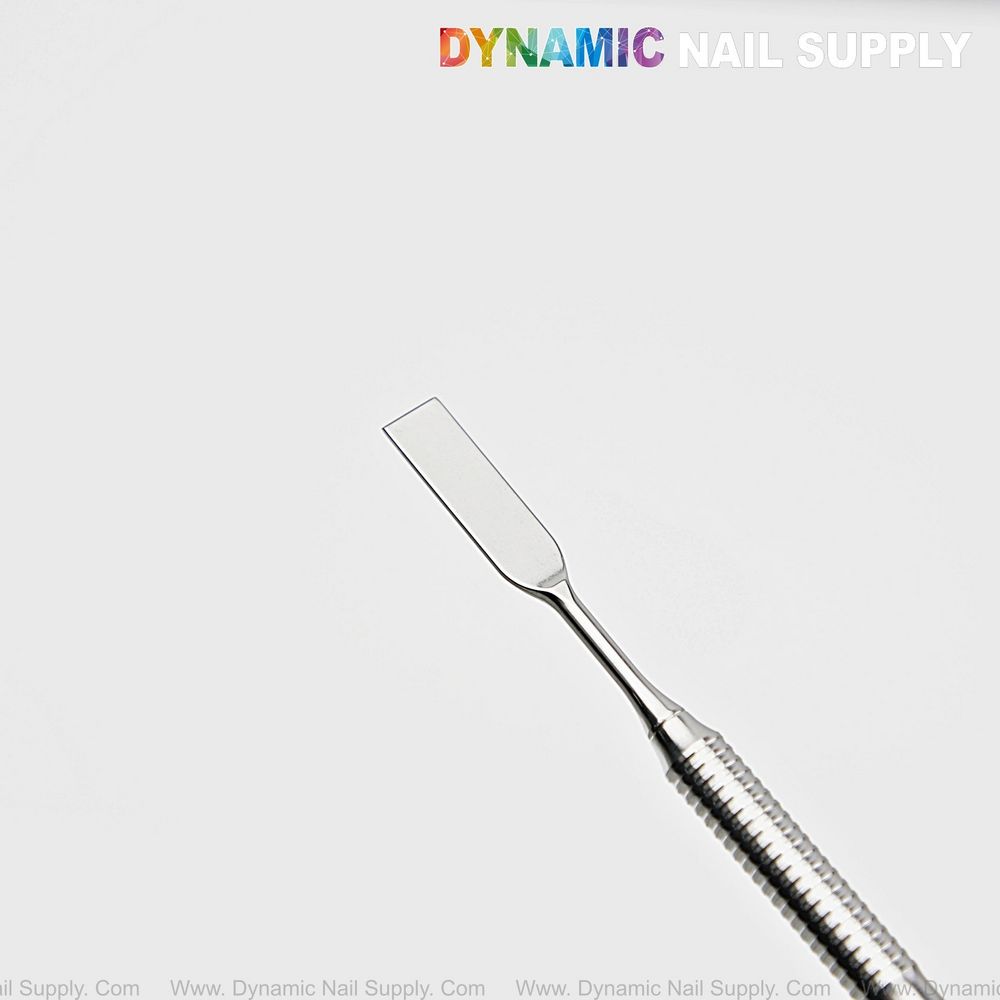
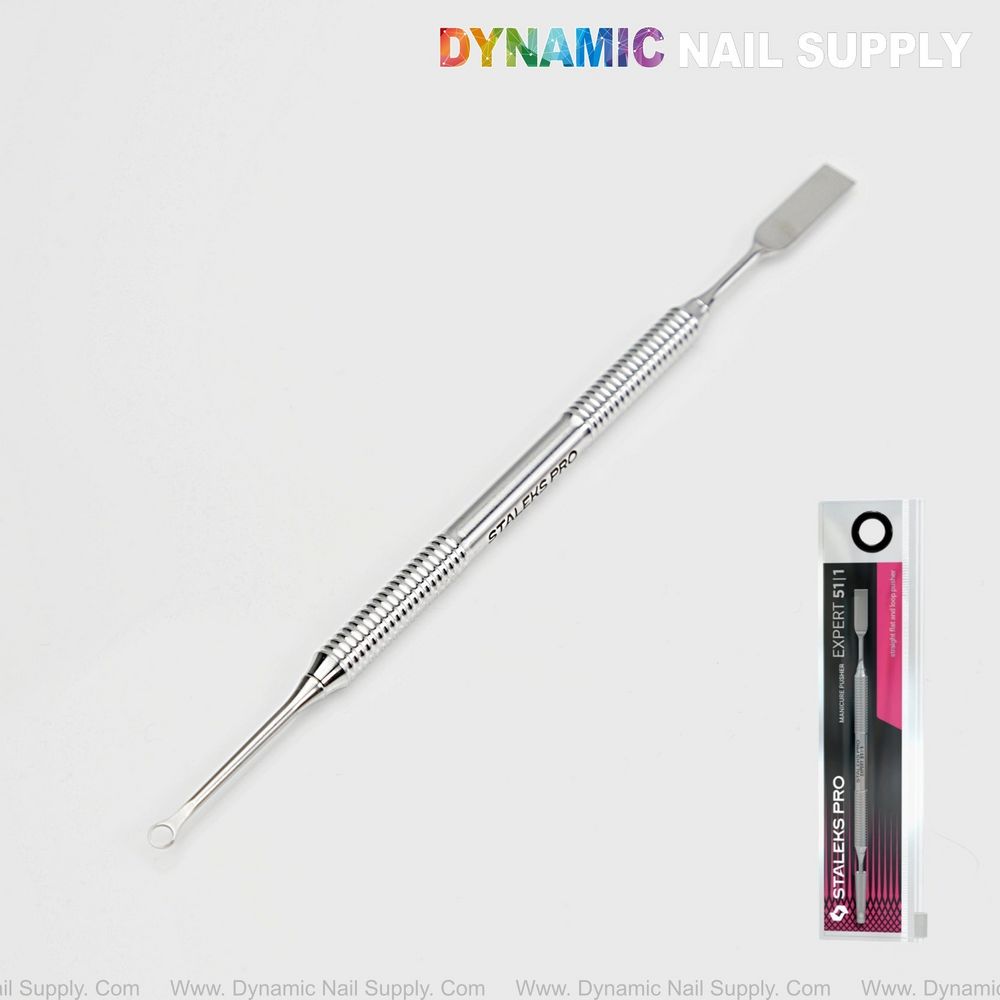
The PE-51/1 Staleks Manicure pusher EXPERT 51 TYPE 1 is a double-ended stainless steel tool for refined cuticle and pterygium work.
How should you choose when to use the flat versus the loop end?
Start by assessing plate width and tissue condition. Use the straight flat blade for lifting and uniformly pushing back the cuticle on narrow to medium nail plates. The flat end gives controlled coverage without digging into lateral folds. Switch to the loop end when you need to remove pterygium, dried adhesion or residual skin from the nail surface; the loop concentrates pressure along its rim for scraping and gentle scooping motions.
What grip and hand positioning deliver the most consistent control?
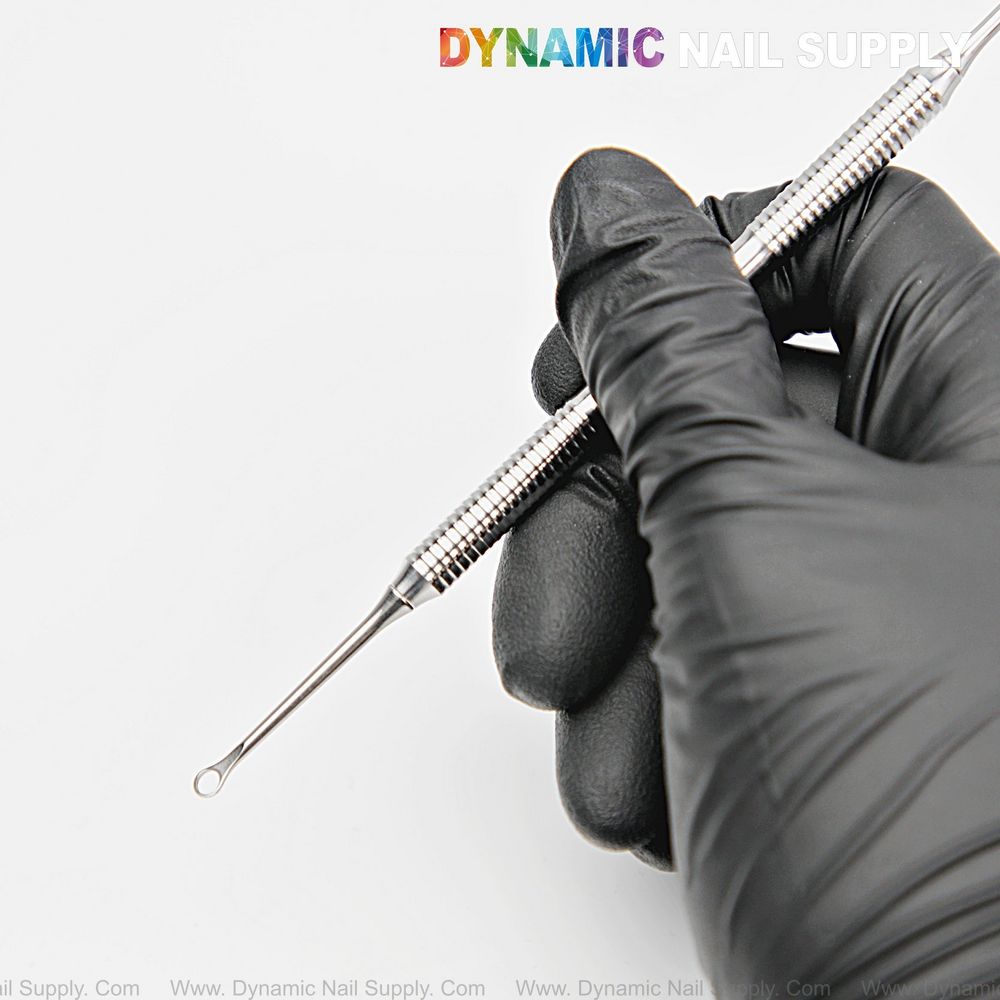
Adopt a neutral wrist and hold the corrugated cylindrical handle like a pencil, resting the tool between your index finger and thumb with the barrel seated against the distal pad of your middle finger. The textured rings reduce slippage during longer services; rely on fingertip pressure rather than arm force. For micro-adjustments, cradle the client’s finger with your nondominant hand and pivot the tool from the base of the fingers to maintain even contact angle across the cuticle arc.
How do you use strokes and angles for precise cuticle work?
- Flat pusher: angle the blade at roughly 10–15 degrees to the plate and apply shallow, continuous strokes away from the eponychium. One or two measured passes are usually sufficient—excessive repetition risks irritation.
- Loop pusher: present the loop with its rim tangential to the nail surface and use a light scraping/reverse-scoop motion directed toward the free edge to remove pterygium. Maintain a low angle to avoid gouging.
- Both ends: keep motion smooth and deliberate; abrupt pressure changes show up as irregular edges or micro-trauma.
What tip refinements improve efficiency and finish?
- Match working part size to plate width—standard working areas on this tool are optimized for narrow and medium plates; resist overworking wide plates with a blade that’s too small.
- Work wet when appropriate: a light, professionally applied cuticle softener or soaked remover film reduces resistance and lets you use less mechanical force.
- Use the flat end to create a uniform line of lifted cuticle before switching to nippers or scrapers—this reduces tugging and speeds removal.
- When addressing pterygium, angle the loop so the rim follows the natural curvature; small repeated passes are safer than one aggressive scrape.
- Leverage the long handle for reach and balance when working multiple fingers in sequence; it reduces hand fatigue during back-to-back services.
How should you maintain and sterilize the tool for consistent performance?
After use, remove organic debris with an enzymatic cleaner and a soft brush. The tool’s high-alloy stainless steel construction and GOI paste polish improve corrosion resistance; still, follow your facility’s validated sterilization protocol. This pusher is compatible with dry-heat ovens and autoclaves when processed correctly. Inspect the professionally sharpened edges routinely—if you detect burrs or loss of definition, send the tool for professional re-sharpening rather than attempting aggressive home grinding.
What safety and client comfort notes should you follow?
Avoid aggressive pressure on compromised skin. Stop immediately if the client reports sharp pain or if you see active inflammation. Use mechanical techniques only after appropriate softening and disinfection steps. Store the instrument in a protected tray to avoid damage to the working edges and to preserve the polished finish shown in the product photo.
Mini glossary
- Pterygium: adhered skin at the distal fold that extends onto the plate.
- Flat pusher: straight-blade end used to lift and retract cuticle tissue.
- Loop pusher: ringed end used for controlled scraping and removal of residual tissue.
- GOI paste: polishing compound that improves surface corrosion resistance.
For reliable, repeatable cuticle prep you’ll appreciate the tool’s knurled grip, long handle and dual working ends—professional shops list the PE-51/1 Staleks pusher at $7.49 but prices may change over time.
If you want to integrate this specific pusher into a standardized prep protocol, consider assigning it for narrow and medium plates only and pairing it with a consistent softening step to reduce variability; PE-51/1 Staleks Pusher
Mini FAQ
- Can I autoclave this tool? Yes—process it in accordance with your validated autoclave cycle and facility protocols.
- Which end goes first? Start with the flat pusher to lift tissue, then use the loop for pterygium or residual removal.
- How often check sharpening? Inspect visually before each shift and send for professional touch-up when edges show wear.
