
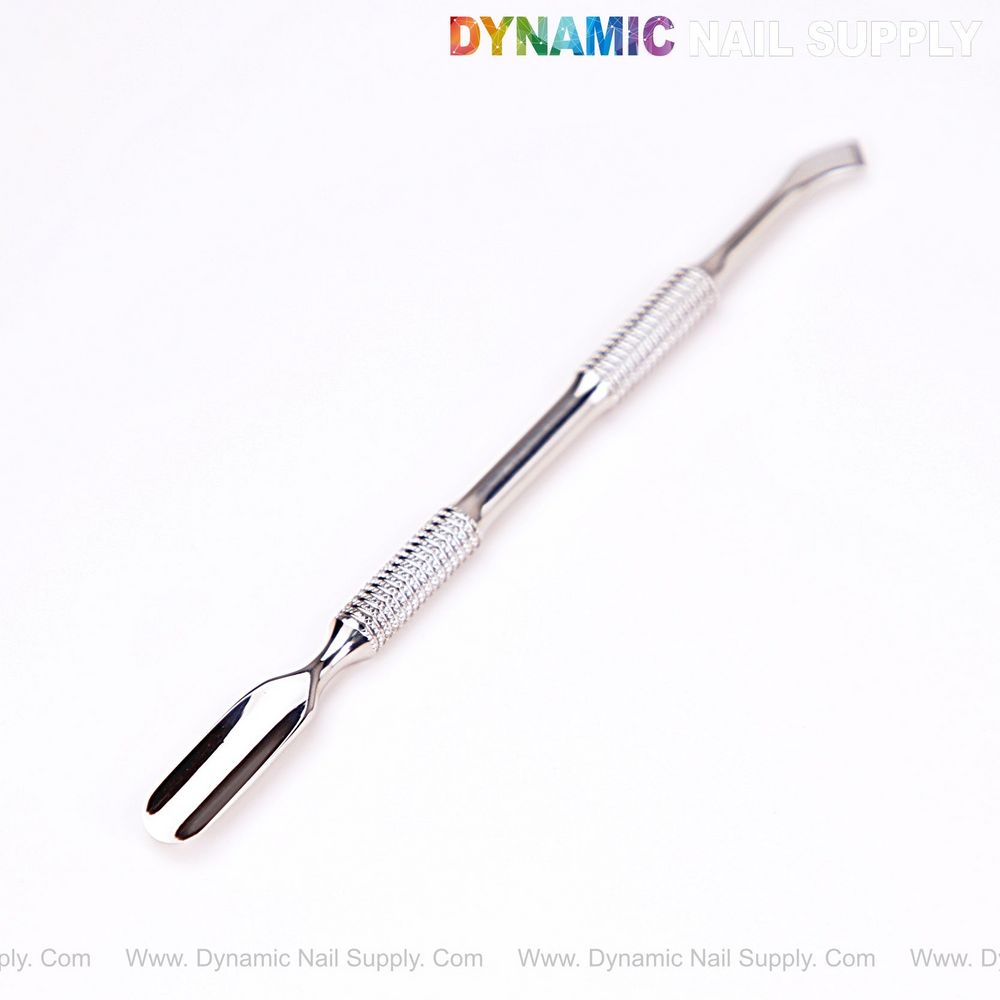
The NT1234 – Professional Double-Function Cuticle Pusher is a mirror‑polished, double‑ended stainless steel tool with a thin rectangular edge on one end and a spoon‑shaped pusher on the other.
When should you pick the thin rectangle cuticle pusher instead of a spoon or bevel?
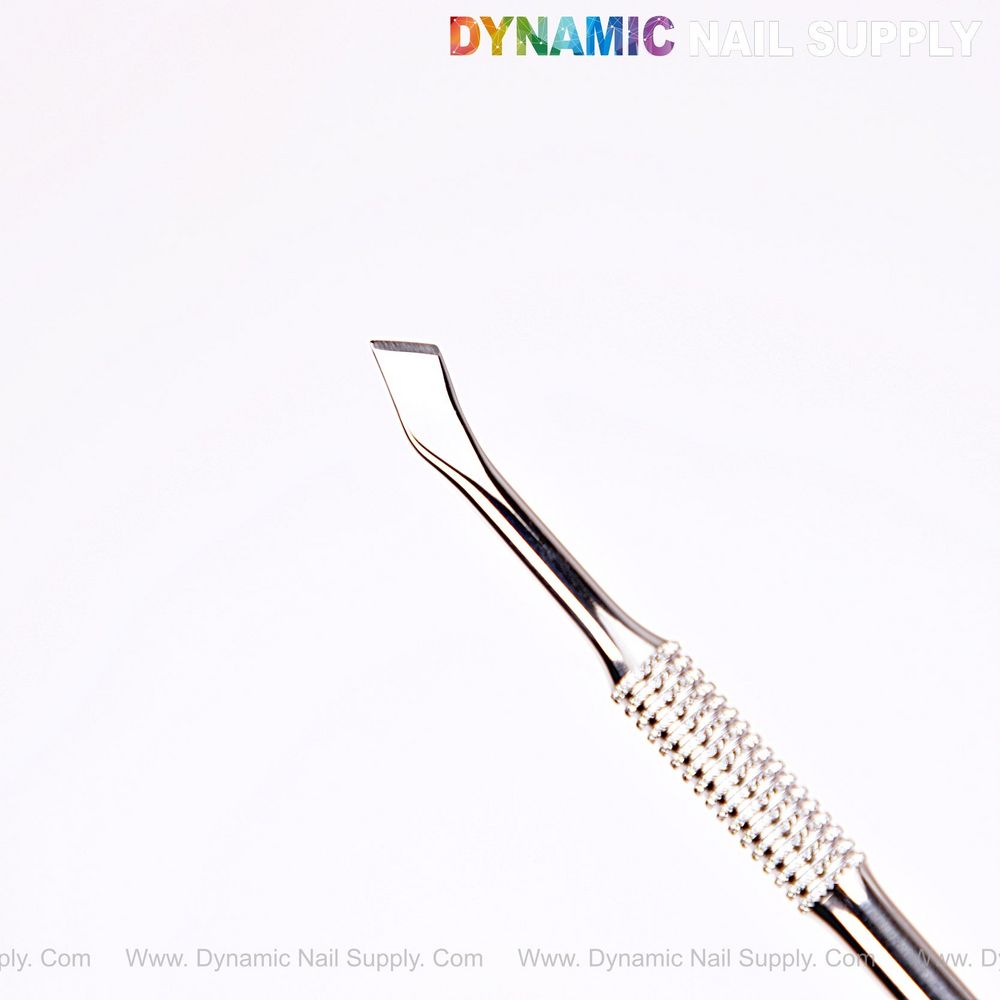
You choose the thin rectangle cuticle pusher when accuracy matters: tight lateral folds, narrow eponychial ridges, and trimmed cuticle lines that need a clean, linear edge. The thin profile concentrates contact onto a narrower surface, so you get sharper separations between cuticle and nail plate. Use it where you would otherwise struggle to reach between the nail groove and product edge with a rounded or hatchet tool.
How does the thin rectangle compare mechanically to spoon, bevel, and oval ends?
The thin rectangle delivers a linear scraping action; the spoon offers broad, curved pressure; the bevel provides an angled scraping shoulder; the oval is forgiving and displaces tissue with gentle curvature. Mechanically, the rectangle is best for creating crisply defined borders and for removing thin ribbons of pterygium or hardened residue without affecting adjacent skin. Expect less lateral deflection under load due to the narrow contact surface, and pair it with a stable wrist to avoid chatter on reflective finishes.
What nail conditions call specifically for the thin rectangle end?
Prioritize the thin rectangle for:
- Very tight lateral folds where a rounded tool cannot access corners.
- Clients with previous gel or acrylic residue that sits in narrow channels.
- Russian or dry manicure prep when you need micro‑clearance at the proximal edge.
- Creating crisp cuticle lines prior to lacquer, chrome, or precise white tips.
What are step‑by‑step usage tips for consistent professional results?
Follow this sequence to exploit the thin rectangle edge without risking skin damage.
- Soften cuticles first: use a controlled soak or a chemical cuticle relaxant until the tissue is pliable.
- Stabilize the finger: rest the client’s hand on a firm surface so the lateral fold won’t shift under tooling.
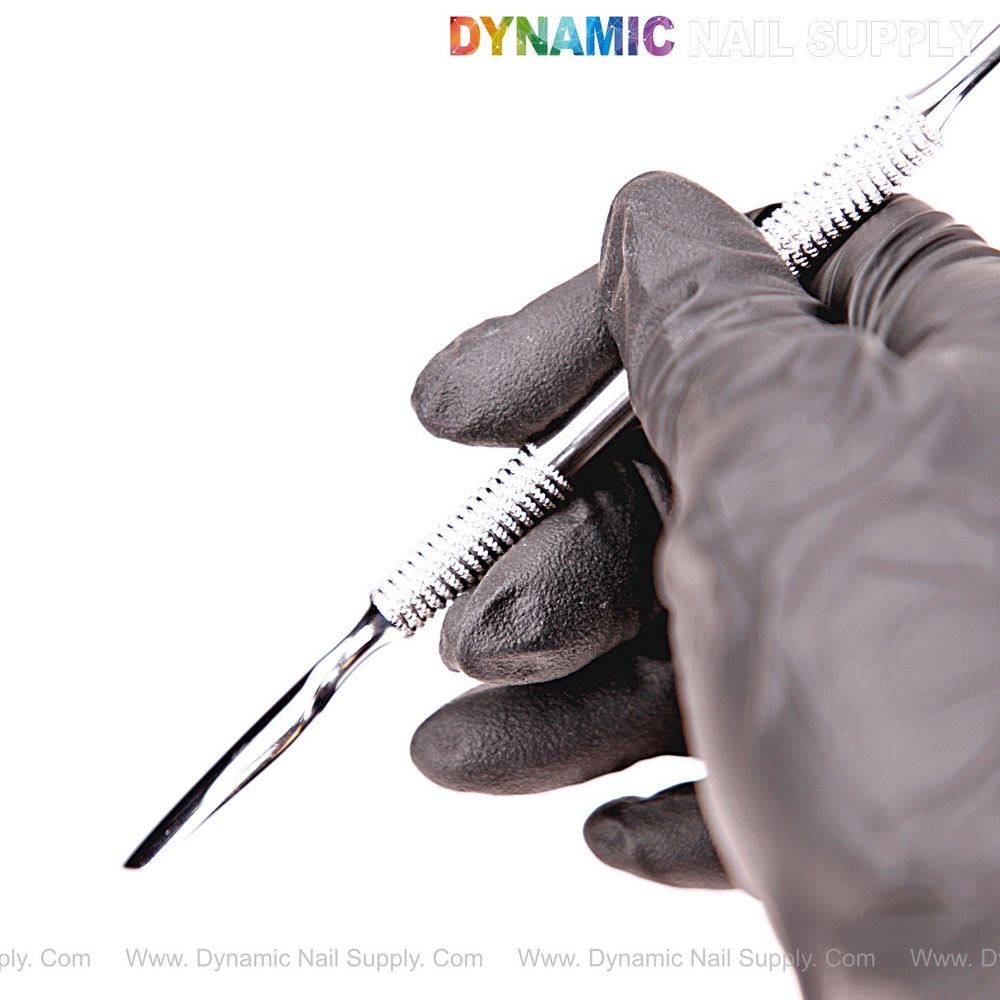
- Choose tool orientation: hold the NT1234 with the knurled grip between thumb and index for fine control; present the thin rectangle at a shallow 15–25° angle for scraping and a slightly steeper 25–35° for lifting residual tissue.
- Use short controlled strokes: advance in micro‑increments along the groove rather than long sweeps to maintain an even line and avoid gouging. Keep motion parallel to the nail plate when removing residue, and use a light forward‑down pressure when trimming pterygium.
- Switch ends deliberately: move to the spoon end when you need to reposition or gently push back bulkier cuticle without breaking the proximal seal.
- Inspect and finish: use magnification or bright task lighting to confirm a uniform edge before polishing or product application.
The pictured NT1234’s mirror finish and finely knurled grip aid precise handling during these steps; the retail packaging and color pops in the photo also make inventory identification straightforward. For salon scheduling you may note the low price of $3.99 (prices may change) when budgeting replacement tools.
For routine service, consider how the NT1234 cuticle pusher fits into your prep tray and whether its thin rectangular edge will replace a separate scraper in your kit: NT1234 cuticle pusher.
How do you control pressure, wrist motion, and tool angle for repeatable accuracy?
Pressure should be minimal with the thin rectangle; let the sharpened edge do the work. Use the wrist as a steadying joint and isolate movement to the fingers for micro‑adjustment. If you feel resistance, reduce angle or recondition the cuticle rather than increasing force. For lateral folds, a lateral slide with fingertip stabilization prevents sudden slips that create uneven lines.
How should you care for the NT1234 to keep the thin rectangle sharp and safe?
Rinse debris immediately, then follow your clinic’s sterilization protocol; the stainless steel finish and polishing are compatible with autoclaves and dry‑heat units. Check the thin rectangle edge under light for burrs—if you see raggedness, professional resharpening or replacement will restore a precise line. Store the tool in a protective sleeve to avoid edge damage and to keep the mirror surface free of scratches that can catch on fine tissue.
Mini glossary
- Thin rectangle: Narrow flat edge designed for linear scraping and micro‑clearance.
- Pterygium: Overgrown cuticle tissue that can adhere to the nail plate.
- Knurled grip: Textured mid‑body that improves control and reduces slip.
How does the spoon end support precision work after you use the thin rectangle?
After you refine the border with the thin rectangle, use the spoon end to smooth transitions and gently reposition cuticle toward the eponychium. The spoon’s broader curve reduces the risk of sharp edges digging into skin, so it’s the logical finishing tool when you’ve completed narrow clearance tasks.
Mini FAQ: What should I check before and after using this tool?
Q: How do I test the edge for readiness?
A: Run the edge across a gloved fingertip pad at low pressure to confirm a clean, snag‑free pass.
Q: When should I stop using the thin rectangle on a client?
A: Stop if the tissue reddens, if the client reports sharp pain, or if you cannot access the area without increasing force—switch to softer preparation instead.
Q: Can I sterilize every time between clients?
A: Yes; follow your salon’s approved sterilization and disinfection routine to maintain hygiene and tool integrity.
